
PROJECT DESCRIPTION
Soil pollution is a major environmental problem caused by heavy metals, pesticides, industrial waste, petroleum residues, microplastics, and other toxic contaminants. These pollutants can interact with soil organic matter, mineral surfaces, water flow, plant roots, and microorganisms, affecting soil fertility, groundwater quality, food-chain safety, and ecosystem health.
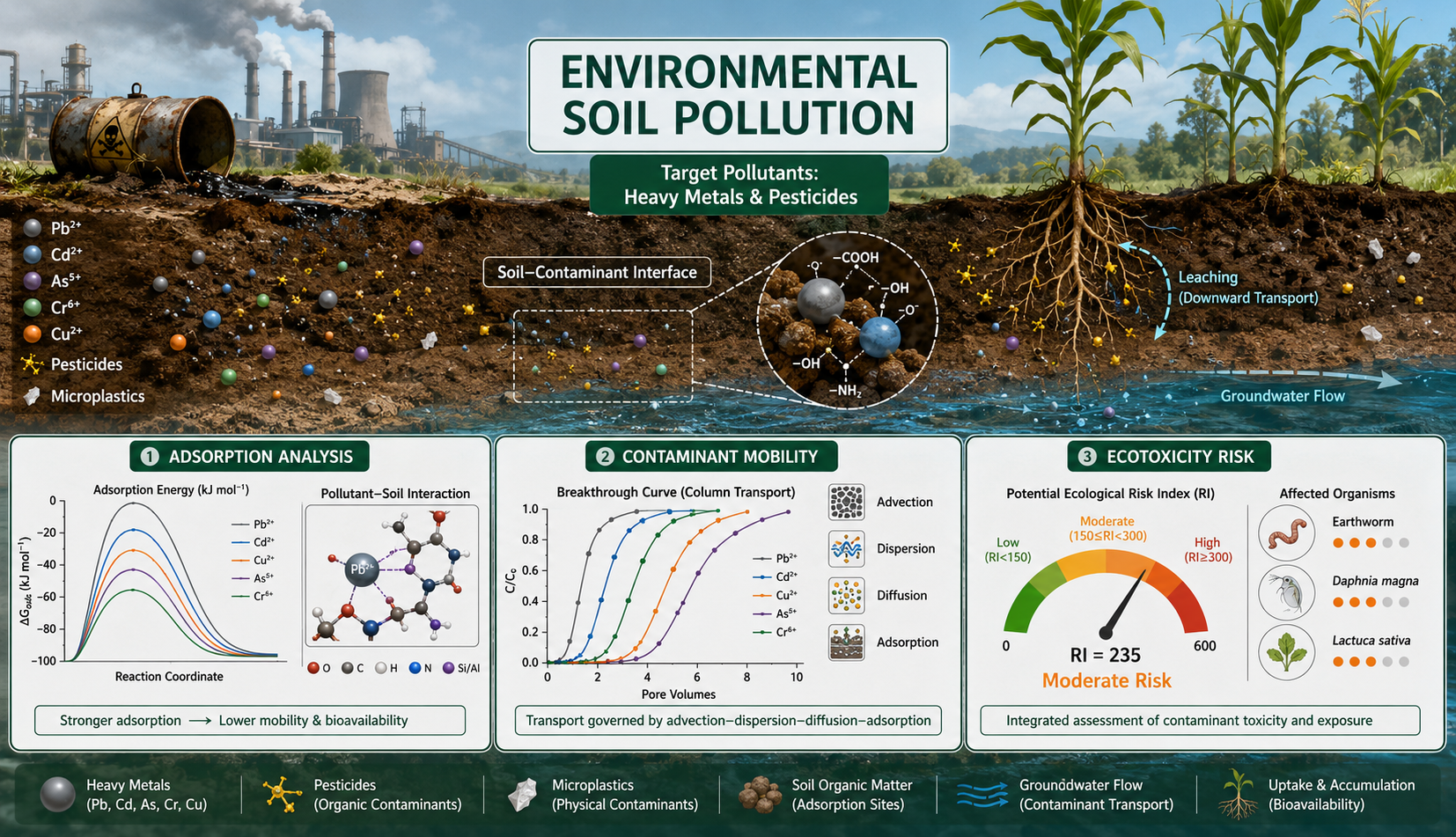
This research project focuses on computational and analytical assessment of soil–contaminant interactions, pollutant adsorption, mobility, leaching behavior, bioavailability, and ecotoxicity risk. The project can support environmental monitoring, pollutant transport prediction, remediation strategy design, and risk assessment for agricultural and industrially contaminated soils.
PROJECT CONTENT
- Selection of target soil pollutants such as Pb, Cd, As, Cr, Cu, pesticides, and microplastics
- Soil organic matter and mineral surface interaction modeling
- Soil–contaminant adsorption and binding energy analysis
- Heavy metal and pesticide mobility assessment
- Leaching and groundwater transport pathway evaluation
- Adsorption, diffusion, dispersion, and advection-based contaminant transport analysis
- Contaminant bioavailability and plant uptake prediction
- Ecotoxicity risk evaluation for soil organisms and aquatic indicators
- Environmental risk index and exposure assessment
- Comparative analysis of pollutant retention vs mobility
- Remediation strategy support using adsorption and immobilization insights
- Environmental safety interpretation for agricultural and industrial soil systems